Practical grinding for small gold plants
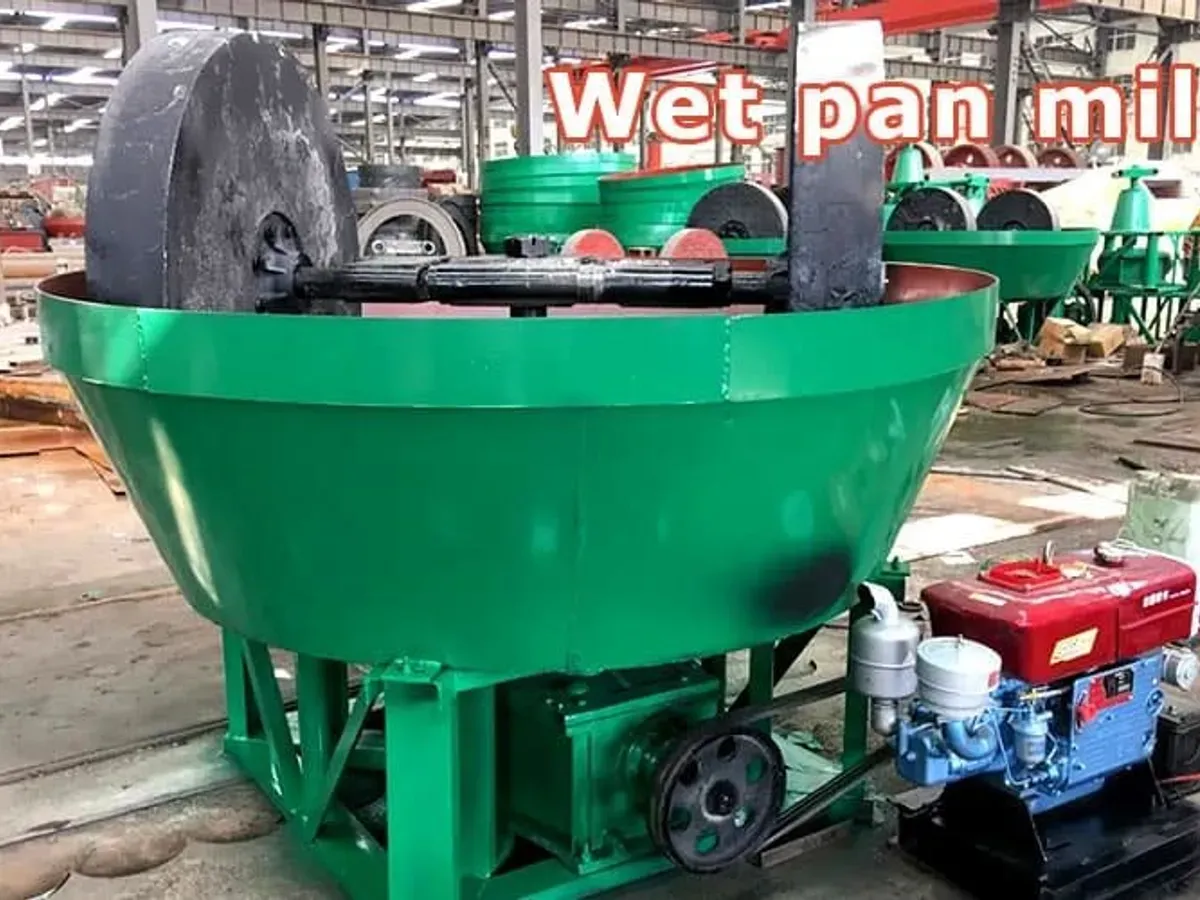
A wet pan mill—also called a gold grinding machine or wheel pan mill—uses heavy rollers to crush and knead ore in a circular pan. It is widely chosen for small and medium gold operations because it is mechanically simple, relatively easy to maintain and works with modest installed power.
The machine should be used as part of a process circuit. A typical arrangement is jaw crusher → fine crusher → wet pan mill → centrifugal concentrator or shaking table.
Preliminary model guide
| Model | Feed size | Nominal capacity | Power | Speed |
|---|---|---|---|---|
| 1100 | <20 mm | 0.5 t/h | 5.5 kW | 11–19 rpm |
| 1200 | <20 mm | 0.5–1 t/h | 7.5 kW | 11–19 rpm |
| 1400 | <20 mm | 1–1.5 t/h | 15 kW | 18–21 rpm |
| 1500 | <30 mm | 1.5–2 t/h | 22 kW | 18–22 rpm |
| 1600 | <30 mm | 2–3 t/h | 30/37 kW | 18–20 rpm |
These values are for preliminary selection. Actual output depends on ore hardness, feed consistency, water addition, operator practice and target grind.
Built for maintainable field operation
The simple drive, replaceable roller surfaces and accessible pan make the machine suitable for sites where maintenance infrastructure is limited. Matching the crusher discharge to the mill feed limit is important: oversized rock and tramp metal increase wear and can damage the grinding assembly.
Frequently asked questions
Is a wet pan mill better than a ball mill?
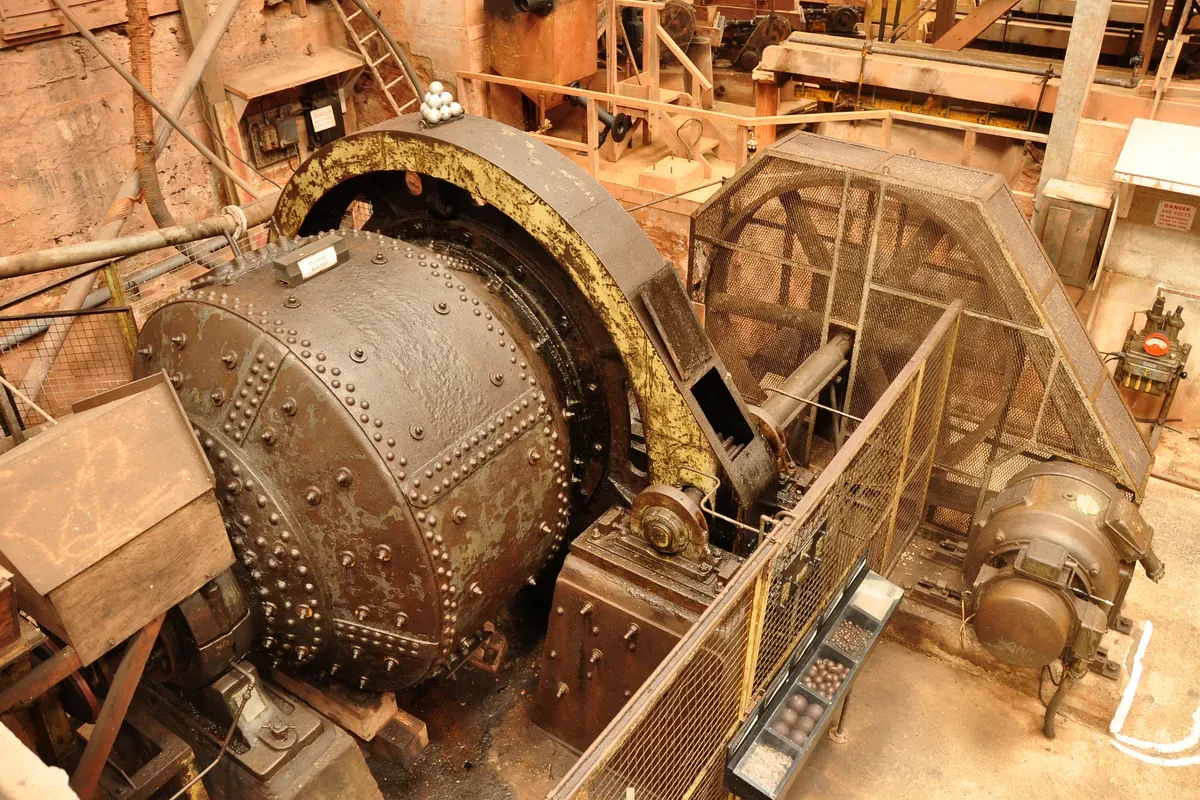
It depends on scale. Wet pan mills suit lower-throughput plants with tighter capital and power constraints. Ball mills are generally better for continuous, higher-capacity and finer-grinding circuits.
Does the wet pan mill recover gold by itself?
It performs grinding and slurry mixing. Final recovery depends on ore mineralogy, liberation size and the downstream concentration or leaching process.
How do I choose between the 1200 and 1500 models?
Start with hourly throughput, maximum feed size, available motor power and target fineness. A sample test or ore report improves selection accuracy.